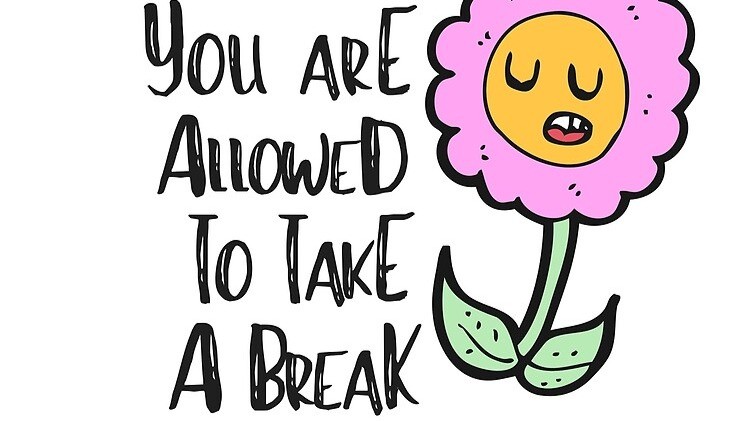
Or: How I Learned to Stop Worrying and Love the Couch
Listen up, overachievers and chronic desk-dwellers. We need to talk about something that’s been bothering me more than people who don’t use their turn signals: the fact that we’ve somehow convinced ourselves that taking mental health breaks is about as productive as teaching a goldfish to do taxes.
But here’s the thing – your brain isn’t a smartphone that can just keep running apps in the background until it mysteriously dies at 2 PM. It’s more like that old laptop you refuse to replace because “it still works,” except when it doesn’t, and then you spend three hours yelling at it while it makes sounds like a dying whale.
The Great Mental Health Break Paradox
We live in a world where we’ll spend 20 minutes researching the perfect ergonomic chair to prevent back pain, but then act like taking five minutes to stare at a wall is basically admitting defeat to the universe. It’s like being worried about getting a paper cut while juggling chainsaws.
The irony is thicker than gas station coffee: we’re so busy being productive that we’ve become professionally unproductive. We’re the human equivalent of a browser with 47 tabs open, three of which are playing audio, and one of which is definitely an online shopping cart we forgot about.
Signs You Need a Mental Health Break (A Diagnostic Guide)
Level 1: The Caffeine Shakes You’ve started referring to your coffee mug as your “emotional support beverage.” You know exactly how many steps it takes to get from your desk to the coffee machine (17, in case you’re wondering about mine).
Level 2: The Email Rage You’ve developed strong opinions about people who don’t use “Reply All” appropriately. You’ve also started passive-aggressively correcting grammar in your head during meetings. “It’s ‘between you and ME,’ Sharon, not ‘between you and I!’”
Level 3: The Houseplant Conversations You’ve started having meaningful conversations with inanimate objects. Your succulent has become your therapist, and honestly, it’s a better listener than most humans.
Level 4: The Netflix Zombie You’ve watched three episodes of a show you don’t even like because the remote is too far away and moving requires making decisions. You’ve also started referring to your couch as “home base.”
The Science-y Bit (Don’t Worry, I’ll Keep It Simple)
Here’s what actually happens when you don’t take mental health breaks: your brain essentially starts running on the neurological equivalent of dial-up internet. Everything takes forever, nothing works right, and you start making the kind of mistakes that make you question your life choices.
Scientists (the smart people in lab coats who know things) have discovered that our brains have something called a “default mode network.” It’s like your brain’s screensaver, except instead of flying toasters, it’s processing emotions, consolidating memories, and basically doing the mental equivalent of organizing your sock drawer.
When you don’t give your brain time to run its screensaver, it’s like never letting your computer restart. Eventually, everything gets weird and slow, and you start getting pop-ups for things you definitely didn’t sign up for.
The Art of the Strategic Mental Health Break
Taking a mental health break isn’t about lying on a beach sipping something with an umbrella in it (though if that’s available, I’m not stopping you). It’s about giving your brain permission to switch from “GO GO GO” mode to “maybe just… be for a minute” mode.
Here are some scientifically-backed* (*by my personal experience) mental health break strategies:
The 5-Minute Stare: Find a window. Look out of it. Think about literally nothing. If thoughts intrude, acknowledge them like you would a neighbor’s barking dog – annoying, but temporary.
The Bathroom Meditation: Don’t laugh. The bathroom is the only place where you can guarantee five minutes of uninterrupted time. It’s basically a meditation pod with plumbing.
The Walk of Shame (But Not Really): Take a walk around the block. Don’t bring your phone. Yes, really. I know it feels like leaving the house without pants, but you’ll survive.
The Power Nap Gambit: Twenty minutes max. Any longer and you’ll wake up thinking it’s 1987 and wondering why your boss looks so much older.
The Guilt Factor: Or, How I Learned to Stop Worrying About Being “Lazy”
Let’s address the elephant in the room – the guilt. We’ve somehow internalized the idea that taking breaks is morally equivalent to eating ice cream for breakfast (which, by the way, is occasionally acceptable if you’re an adult paying your own bills).
But here’s the truth: taking mental health breaks isn’t lazy. It’s maintenance. You wouldn’t feel guilty about getting your car serviced or updating your software. Your brain deserves the same consideration, and probably better customer service.
The most productive people in the world – the ones who accomplish things that make the rest of us feel like we’re failing at life – all have one thing in common: they understand that rest is not the opposite of productivity. It’s the foundation of it.
The Bottom Line (Because We All Love Bottom Lines)
Your mental health is not a luxury item. It’s not something you earn after you’ve checked off everything on your to-do list. It’s the thing that makes the to-do list possible in the first place.
So take the break. Sit on the couch. Stare at the ceiling. Talk to your houseplant. Watch that show you’ve been meaning to watch. Read a book that has nothing to do with self-improvement or career advancement.
Your brain will thank you. Your productivity will thank you. And most importantly, your future self – the one who doesn’t have to spend three hours yelling at a laptop – will definitely thank you.
Now, if you’ll excuse me, I need to go take my own advice and have a meaningful conversation with my coffee mug. It’s been looking neglected lately.
P.S. If you’re reading this during work hours, congratulations – you’ve already started taking better care of your mental health. Now go get a glass of water and maybe look at something that isn’t a screen for thirty seconds. Your eyes will thank you too.
 Will Anfeldt
Leave a comment